
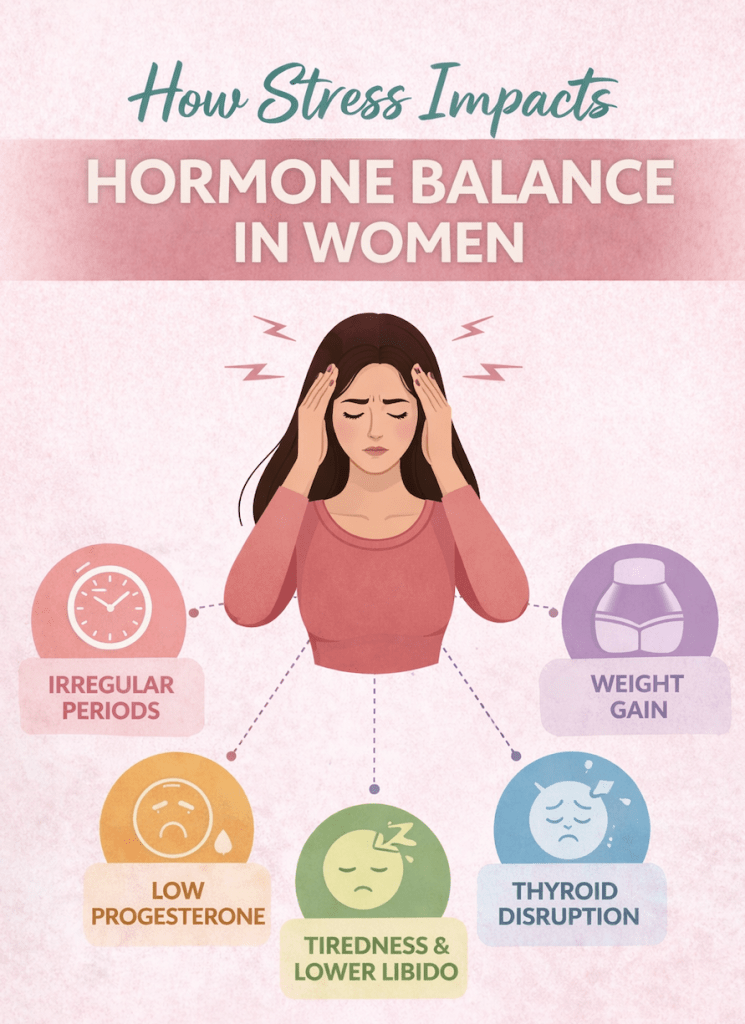
Stress isn’t just a mental or emotional experience — it’s a full-body hormonal event. For many women, chronic stress becomes one of the biggest hidden drivers of hormone imbalance.
If you’re experiencing fatigue, mood swings, irregular cycles, weight changes, poor sleep, or feeling constantly “wired but tired,” your stress response may be playing a larger role than you realize.
Let’s break down how stress affects hormone balance in women — and what supportive steps can help.
The Stress-Hormone Connection
When your body perceives stress (physical, emotional, or environmental), it releases cortisol from the adrenal glands. Cortisol is not “bad” — it’s essential for survival. It helps regulate blood sugar, blood pressure, inflammation, and energy.
The issue arises when stress becomes chronic.
Ongoing stress can lead to:
- Elevated or dysregulated cortisol levels
- Disrupted progesterone production
- Blood sugar instability
- Thyroid suppression
- Sleep disturbance
Over time, this creates a ripple effect throughout the endocrine system.
How Stress Disrupts Progesterone
One of the most common hormone shifts seen in stressed women involves progesterone.
Progesterone is a calming hormone that supports:
- Regular menstrual cycles
- Healthy sleep
- Mood stability
- Fertility
- Nervous system balance
When stress is high, the body prioritizes cortisol production. Because cortisol and progesterone share precursor pathways, prolonged stress can contribute to lower progesterone levels — sometimes referred to as “progesterone steal.”
This may show up as:
- Irregular or heavier cycles
- PMS symptoms
- Increased anxiety
- Difficulty sleeping
Stress and Thyroid Function
Chronic stress can also impact thyroid hormone conversion and signaling. Elevated cortisol may interfere with how thyroid hormones are activated and utilized at the cellular level.
Symptoms may include:
- Fatigue
- Weight changes
- Brain fog
- Cold sensitivity
- Low motivation
Even if lab results fall within “normal” ranges, stress may still be affecting how efficiently your body uses thyroid hormones.
The Nervous System Factor
Many women live in a constant fight-or-flight state. When the nervous system stays activated, the body prioritizes survival over reproduction, digestion, and restoration.
This is why stress can also contribute to:
- Digestive issues
- Blood sugar swings
- Cravings
- Reduced libido
- Chronic inflammation
True hormone support often begins with nervous system regulation.
What Can Help Restore Balance?
Supporting hormone balance in women doesn’t start with quick fixes — it starts with calming the stress response.
Practical foundational strategies include:
1. Nervous System Regulation
Breathwork, walking, sunlight exposure, and consistent sleep rhythms help signal safety to the body.
2. Blood Sugar Stability
Balanced meals with protein, fiber, and healthy fats can reduce cortisol spikes and support steady energy.
3. Sleep Prioritization
Quality sleep allows cortisol to reset and progesterone to stabilize.
4. Strategic Supplement Education
Some women explore supportive options such as magnesium, adaptogenic herbs, or cannabinoids like CBD for stress resilience. Education and personalized guidance are key.
You Don’t Have to Navigate This Alone
Hormone imbalance often feels confusing and frustrating. But for many women, stress is the underlying thread connecting their symptoms.
At Michelle Smith Wellness, we focus on sustainable stress resilience, nervous system support, and whole-person wellness strategies. When the body feels safe and supported, hormone balance becomes more attainable.
If you’re feeling overwhelmed, exhausted, or out of sync, the first step isn’t doing more — it’s supporting your body differently.
You Don’t Have to Navigate This Alone
Hormone imbalance can feel confusing, frustrating, and discouraging — especially when you’re doing “all the right things” but still feel tired, wired, or out of sync.
For many women, chronic stress is the hidden driver behind mood shifts, sleep disruption, irregular cycles, and energy crashes. When we begin by supporting the nervous system and building true stress resilience, hormone balance often becomes more attainable and sustainable.
At Michelle Smith Wellness, we take a whole-person approach to stress, hormone health, and daily wellness. Through personalized coaching and cannabinoid education, you’ll gain clarity, practical tools, and supportive strategies that fit your real life — not a perfect one.
If you’re ready to:
• Feel calmer and more regulated
• Improve sleep and energy naturally
• Better understand your body’s stress signals
• Build sustainable hormone-supportive habits
I invite you to take the next step.
✨ Schedule a discovery session to explore how personalized wellness coaching and education can support your hormone and stress resilience journey.
You deserve to feel steady, supported, and aligned in your body again.
 Michelle Smith Wellness