
Sleep struggles are incredibly common for women — especially during high-stress seasons of life, perimenopause, hormonal shifts, or chronic inflammation.
If you’ve been searching for cannabis for sleep, CBD for women, or natural sleep support, you’re not alone. More women are exploring cannabinoid education as part of a holistic approach to improving sleep quality.
But can cannabis actually help women sleep better?
Let’s break it down.
Why Women’s Sleep Is Different
Women’s sleep patterns are influenced by:
- Hormonal fluctuations (estrogen and progesterone)
- Stress and cortisol levels
- Nervous system activation
- Inflammation
- Blood sugar stability
- Life demands and mental load
When the nervous system is chronically activated — often called “fight or flight” mode — falling asleep and staying asleep becomes more difficult.
This is where the endocannabinoid system may play a role.
The Endocannabinoid System & Sleep Regulation
The endocannabinoid system (ECS) helps regulate:
- Stress response
- Mood
- Inflammation
- Pain perception
- Sleep-wake cycles
Cannabinoids like CBD interact with this system indirectly. Research suggests CBD may help support:
- Reduced sleep onset delay (falling asleep faster)
- Calmer stress response before bed
- Decreased nighttime awakenings in some individuals
- Improved overall sleep quality
However, results vary — and strategy matters.
How Cannabis May Support Women’s Sleep
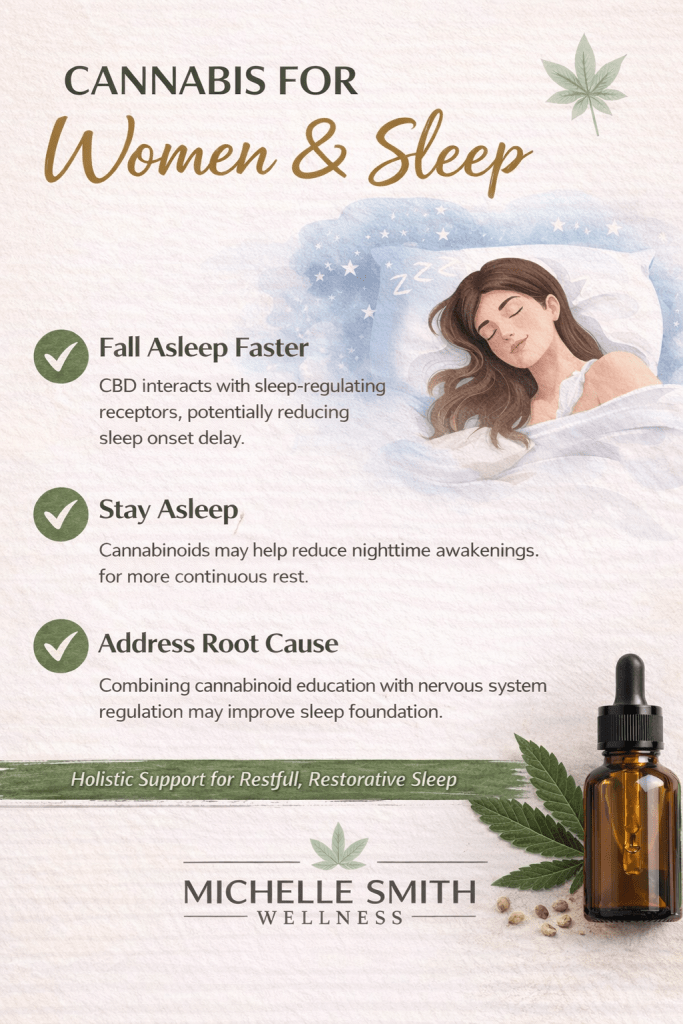
1️⃣ Falling Asleep Faster
Many women struggle with racing thoughts at bedtime. CBD may help support nervous system regulation by promoting a sense of calm and reducing stress-related hyperarousal.
When the body feels safer and more regulated, sleep often follows more naturally.
2️⃣ Staying Asleep
For women who wake between 2–4am (a common stress-related pattern), cannabinoids may help support more stable sleep cycles by reducing nighttime stress spikes.
Sleep disruptions are often connected to cortisol fluctuations — not just melatonin deficiency.
3️⃣ Addressing Root Causes
Sleep challenges are rarely just about sleep.
They often reflect:
- Chronic stress
- Hormonal shifts
- Inflammation
- Nervous system dysregulation
Cannabis, when used intentionally, may support the body’s regulatory systems rather than simply “knocking you out.”
But CBD alone is not the solution.
Cannabis is not a cure for insomnia, and it’s not appropriate for everyone. Women should consult their healthcare provider, especially if pregnant, breastfeeding, or taking medications.
When used responsibly and thoughtfully, cannabinoid education can be part of a holistic sleep support plan.
 Michelle Smith Wellness